The Doctor Who Never Came to See the Patient
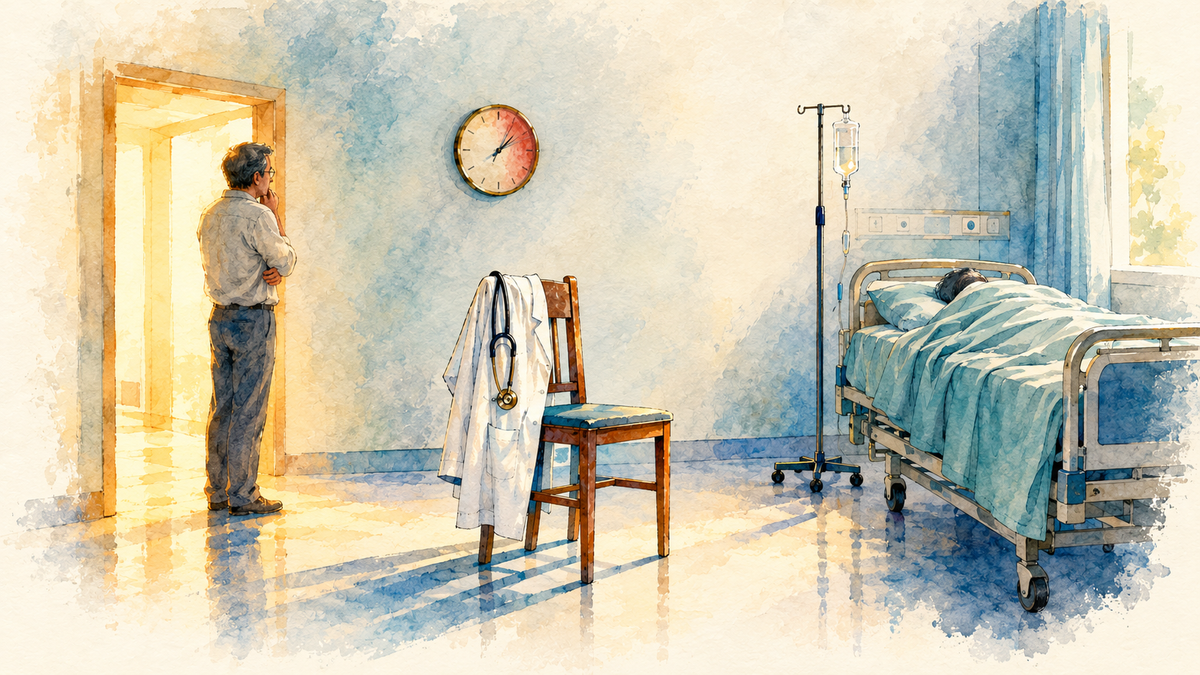
"Arriving late was a way of saying that your own time was more valuable than the time of the person who waited for you."
— Karen Joy Fowler
When Not Attending a Patient Becomes Negligence
There is a popular belief that medical negligence cases are hyper-technical, that they cannot be decided without expert medical opinion, and that a judge is somehow out of his depth. It is far from the truth. Most cases do not turn on exclusively medical questions at all. They turn on medico-legal failures: the patient was not attended, was abandoned, was not admitted, no history was taken, no examination was done, proper investigations were not advised, consent was not taken, treatment was delayed, juniors without qualification were left in charge, the wrong drug was prescribed, there was no supervision, no referral, no equipment, or the patient was discharged too early. These are questions of fact. They can be decided by common sense from the medical record and the evidence on file.
Patients and their families describe the unexpected and unexplained suffering or death of a loved one in plain language, and rarely in chronological order. One has to read between the lines, not merely to understand, but to feel the pain of the patient and the family. Do that, and the breach of duty by the doctor or the hospital usually reveals itself. Of all these breaches, the simplest and most damning is this: the doctor was not there.
Key Takeaways
- Most medical negligence cases involve questions of fact, not complex medical science, and can be decided from the record using common sense.
- Under Article 21 of the Constitution, failure of a government hospital to provide timely treatment violates the patient's right to life.
- In an emergency, a doctor must treat; fees and police formalities can wait, death cannot.
- Once a patient is admitted, the doctor and paramedical staff must attend at intervals that match the patient's condition, and record every visit with time and signature.
- Attending is not the same as monitoring; critical, ICU and post-operative patients need frequent physical attendance.
- The burden lies on the doctor to show what action was taken at each visit.
- Hospitals are vicariously liable for non-attendance by their staff.
What the Courts and the Code Say
Paschim Banga Khet Mazdoor Samity v. State of West Bengal
In Paschim Banga Khet Mazdoor Samity v. State of West Bengal (1996) 4 SCC 37 [1986-96 Consumer 2040 (SC)], the Supreme Court, in the context of medico-legal cases, emphasised the need for rendering immediate medical aid to injured persons to preserve life, and the obligations of the State as well as of doctors in that regard. It held that failure on the part of a government hospital to provide timely medical treatment to a person in need of such treatment results in violation of his right to life guaranteed under Article 21.
P.K. Mukherjee v. Ruby General Hospital
In P.K. Mukherjee v. Ruby General Hospital, II (2005) CPJ 35 (NC), the National Commission put the question in words no doctor should forget:
"Can Doctors insist and wait for money (fees) when death is knocking the doors of the patient? Obvious answer is recovery of fee can wait - but not the death nor the treatment for trying to save the life".
The case concerned the death of Sumanta Mukherjee, a second-year B.Tech. (Electrical Engineering) student at Netaji Subhash Chandra Bose Engineering College. On 14 January 2001, at about 8.00 a.m., a Calcutta Tramway Corporation bus collided with the motorcycle he was riding. He was brought to Ruby General Hospital, Kolkata, the hospital nearest to the accident.
Treatment was started, and then stopped, because those who brought him could not deposit Rs. 15,000. The sole question before the Commission was whether the doctors were deficient in not continuing treatment once it had begun. Denial of treatment led to the death of a young boy. The answer was never in doubt.
The Code of Ethics
The Medical Council of India's Code of Ethics Regulations, 2002 (amended up to 2010), Regulation 2.1.1, states:
"Though a physician is not bound to treat each and every person asking his services, he should not only be ever ready to respond to the calls of the sick and the injured, but should be mindful of the high character of his mission and the responsibility he discharges in the course of his professional duties. In his treatment, he should never forget that the health and the lives of those entrusted to his care depend on his skill and attention. A physician should endeavour to add to the comfort of the sick by making his visits at the hour indicated to the patients. A physician advising a patient to seek service of another physician is acceptable, however, in case of emergency a physician must treat the patient. No physician shall arbitrarily refuse treatment to a patient. However, for good reason, when a patient is suffering from an ailment which is not within the range of experience of the treating physician, the physician may refuse treatment and refer the patient to another physician."
The Duty to Attend: Outdoor and Indoor
It is the duty of a doctor to attend the patients under his treatment. For practical purposes, this duty divides into two settings.
Outdoor Patients
A private doctor has the right to choose his patients and is not bound to attend everyone. It is common practice to see outdoor patients during consulting hours, unless, of course, the doctor has put up a board announcing "Emergency 24 hrs." Then he is bound to see patients at odd hours too.
A government doctor has no such right to choose. Government hospitals are bound to treat and admit patients at any time, because every citizen of India has a constitutional right under Article 21. Ethically and legally, every doctor has a duty to attend a patient in a life-threatening emergency, and all accident cases must be attended without waiting for police procedures.
Indoor Patients
Here the patient hires the services of both the doctor and the hospital, and any shortcoming or imperfection amounts to deficiency in service. A patient is admitted precisely because he needs expert observation. It is therefore the duty of the doctor and the paramedical staff to attend him at reasonable intervals and observe the effect of treatment, whether improvement or deterioration.
A doctor attends as per medical need, not patient demand; in other words, as another reasonable doctor would have attended. A reasonable doctor attends a critical patient more frequently. Every visit must be recorded in the bed-head ticket with clinical findings, further instructions, timings and signature, without leaving blank space in between. The nursing chart must be kept the same way, and if the patient's condition deteriorates, the paramedical staff must inform the doctor immediately.
When a patient is admitted in an emergency by the hospital, the admitting staff must inform the doctor at once. A doctor who is not told cannot be expected to attend immediately; the failure then lies elsewhere.
Attending Is Not Monitoring
There is a difference between attending and monitoring, and it must be clearly understood. Some serious patients need monitoring, not mere attendance. A patient in the ICU or the post-operative recovery room requires frequent physical attendance. Even while being shifted, the patient must be properly attended.
Five Questions Every Court Must Ask
When non-attendance is alleged, the following issues must be resolved.
1. Under Whose Care Was the Patient Admitted?
A patient is admitted either by a doctor or directly by the hospital, after which the admitting staff calls the doctor. The moment the doctor-patient relationship is established, that doctor becomes the patient's primary doctor.
2. What Was the Condition of the Patient?
The doctor must record his findings at the time of admission and thereafter at every visit, with timings. The record is the first and best witness.
3. How Was the Patient Attended?
Mechanical attendance for the sake of the record is not enough. Every visit is meant for noting clinical findings and the steps taken at that point of time. The primary doctor must ensure that treatment is properly administered and that his instructions are followed by the paramedical staff. That is supervision.
Instructions in the bed-head ticket may concern investigations, diet, change of position, oxygen, blood pressure, temperature, pulse and respiration, or the input/output chart. Writing instructions is not enough; the doctor's duty is to see that they are executed properly and on time.
It is often argued that the doctor has commitments to other patients too. In an era of highly paid service, this argument does not stand. If a service provider cannot attend to his customers, he should accommodate fewer of them.
4. Nexus
Whether the patient was properly attended is not an expert medical question. It is a question of common sense. If the condition is not improving, the patient should be attended more frequently; if improving or stable, at reasonable intervals.
Physical presence is not enough. What matters is the action taken: reviewing investigation reports, changing medication, ordering further tests, referring to another specialist, shifting the patient to the ICU. The burden is upon the doctor to show what he did at every visit to combat the situation.
Notably, in a case of deficiency in service, nexus may not need to be strictly proved. A shortcoming or imperfection in service is enough.
5. Liability
It is settled law that the employer is liable for omission to attend on the part of his staff. That is vicarious liability, and the hospital cannot hide behind the absent employee.
Non-Attendance in Practice
The following situations show how non-attendance plays out in real cases:
- Hours without a doctor. Not attending or monitoring a serious patient for hours, leading to irreversible deterioration or death, calls upon the doctor to explain his absence. The facts themselves reflect negligence or deficiency in service; no expert opinion is required. And the patient must be attended by a qualified, competent person.
- No waiting for formalities. As the Supreme Court made clear in Pt. Parmanand Katara v. Union of India (1989) 4 SCC 286, doctors and government hospitals must extend medical aid to injured persons immediately, without insisting on admission forms or similar technicalities. No law requires a doctor to wait for procedural formalities. On the contrary, a doctor who insists on waiting may be guilty of negligent death if death occurs.
- Syntocinon drip. When a patient is on a Syntocinon drip, the doctor should stay with her to watch contractions, adjust the drip and record the foetal heart sounds.
- After delivery. Both mother and newborn must be attended.
- Surgery begins before the incision. The duty to attend starts the moment pre-medication is given; failure from that point is negligence.
- Additional injury during operation. The only reasonable inference is that the surgeon lacked attention and alertness, falling short of the standard of care reasonably expected.
- The surgeon commands the theatre. The surgeon heads the surgical team; without his permission, no one may leave the operation theatre.
- Post-operative care. This is vital and must not be left to juniors. Attendance alone is not enough; the steps taken matter. If death follows from failure to act in time, there is no need of an expert or a post-mortem to establish negligence.
- Limbs under plaster. A limb becoming infected or gangrenous under plaster without being attended is a high degree of negligence. Pressure of time does not justify the risk of not listening and not inquiring.
- Tracheostomy. A patient with a tracheostomy must be monitored to ensure it does not get blocked.
- Paramedical staff. They are equally duty-bound to the patient, and the hospital is vicariously liable for their negligence.
- Falls. A fall in the toilet after an enema, from a trolley, or from an ICU bed is a plain example of non-attendance.
- Vulnerable patients. If the patient is blind or handicapped, extra care is simple common sense.
- A newborn missing from hospital. No comment.
Conclusion
Non-attendance is the most human of medical failures and the easiest to prove. It needs no textbook, no expert, and often no post-mortem; the bed-head ticket, the nursing chart and the clock on the wall tell the story. A doctor who is absent when his patient needs him cannot later take refuge in the complexity of medicine. The question was never complex. It was simply: were you there, and what did you do?
It is not expected that a doctor should attend the patient and his relatives as a Barati, but he is certainly expected to treat them at least as guests — paying ones.
About the Author
Dr. Mahendra K. Joshi, M.S. (General Surgery), LL.M. (Criminology), M.A.S.L.M.E. (USA)
Ex. Member, State Consumer Commission — Gujarat
[email protected] | +91 98790 94226